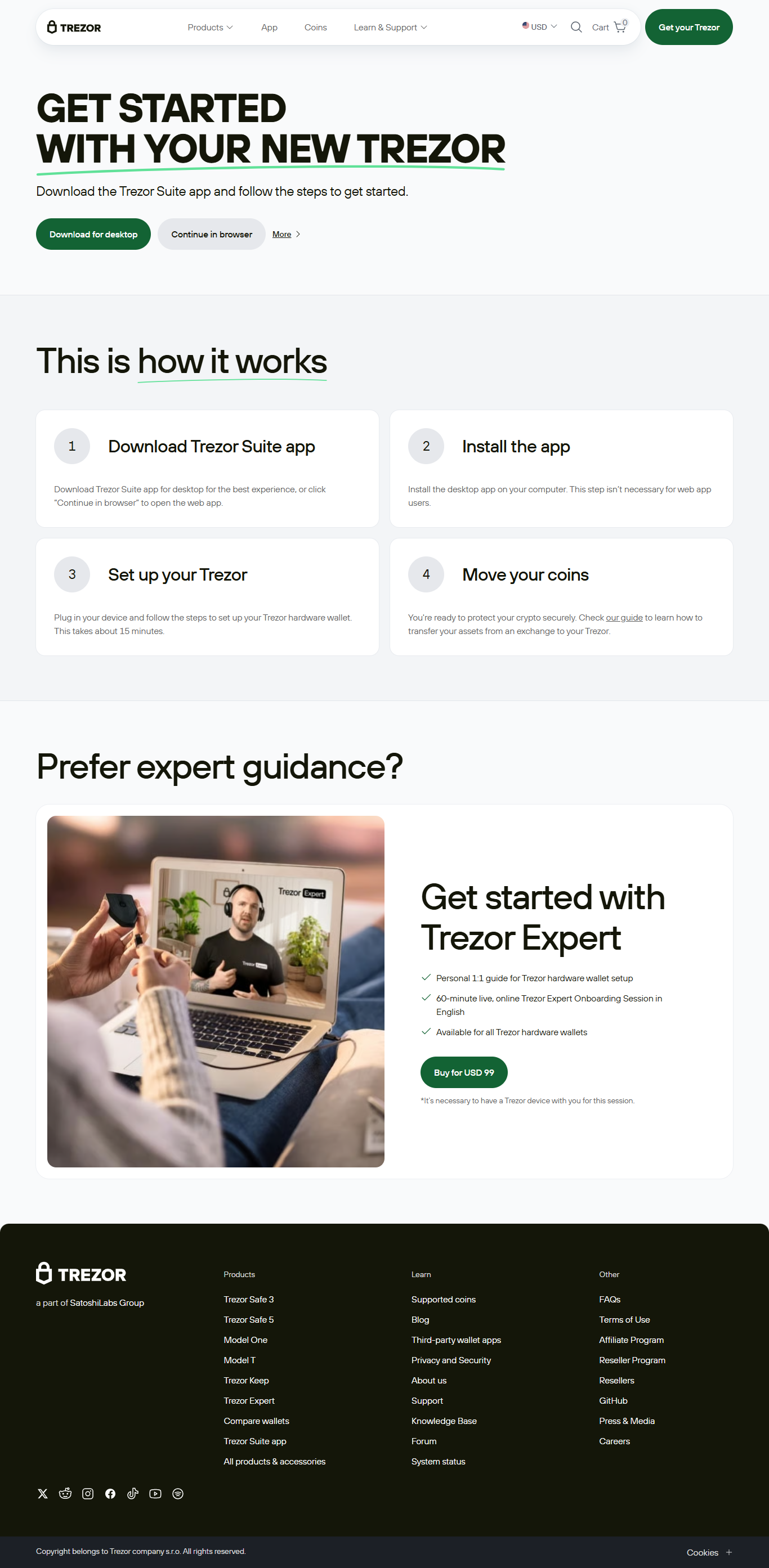
Trézor.io/start: Your Secure Gateway to Crypto Self-Custody (2026 Guide)
In the evolving world of cryptocurrencies, controlling your own private keys is the ultimate step toward financial sovereignty. Hardware wallets are the gold standard for self-custody, and Trézor.io/start is the official launchpad that guides users into the secure Trezor ecosystem. Whether you are brand new to crypto or migrating from another wallet, trezor.io/start helps you install the necessary tools — like trezor bridge and Trezor Suite — and complete your Trezor Login trezor suite securely and easily.
In this comprehensive guide, you’ll learn what Trézor.io/start is, why it matters, how to use it, and how it connects to the broader Trezor ecosystem.
1. What Is Trézor.io/start?
Trézor.io/start is the official onboarding page hosted by SatoshiLabs, the makers of Trezor hardware wallets. It functions as a centralized starting point for:
Installing Trezor Suite, the official wallet interface
Downloading trezor bridge, which enables secure communication between your Trezor device and your computer
Accessing setup guides for hardware wallets
Completing your Trezor Login trezor suite
Learning best practices for wallet security
This single page ensures you never stray onto unsafe websites or download malicious software. It’s the most secure way to begin your Trezor experience and is directly linked from the official Trezor domain.
2. Why Use Trézor.io/start? Security First
When dealing with private keys, your setup process is one of the most critical security steps. Many attackers spoof wallet download pages or bundle malware into unofficial installers. Trézor.io/start eliminates this risk because it:
✔ Redirects you to verified downloads
✔ Offers official setup instructions
✔ Helps you install vital software (like trezor bridge)
✔ Guides you to perform the official Trezor Login trezor suite process
Instead of searching for “Trezor software download” and risking fake sites, always start at trezor.io/start — this reduces phishing and malware risk.
3. How to Use Trézor.io/start: Step-By-Step
Here’s how to use Trézor.io/start to securely set up your Trezor hardware wallet:
Step 1: Visit the Official Start Page
Navigate to https://trezor.io/start in your browser. This is the official entry point to all Trezor setup resources. It will auto-detect your operating system and present the correct downloads.
Step 2: Install Trezor Suite
Trezor Suite is the central application where you’ll manage your cryptocurrencies. From trezor.io/start, choose the correct version for your platform. Installation will guide you to:
Create or restore your wallet
Set a secure PIN
Perform your first Trezor Login trezor suite
Step 3: Install trezor bridge
Your browser needs a secure communication channel to talk with the Trezor device. Trezor bridge is the lightweight utility that does exactly that — it translates USB input between your device and applications like Trezor Suite.
Step 4: Connect Your Trezor Device
Plug in your Trezor hardware wallet. Once Suite and Bridge are installed, the Suite app can detect the device. Follow the on-screen instructions.
Step 5: Complete Your Trezor Login
With the software installed and your device connected, the Trezor Login trezor suite process begins. You’ll be prompted to enter your PIN directly on your Trezor hardware — never on your computer screen — ensuring your credentials remain safe from malware.
Step 6: Master Your Wallet
Once logged in through the Suite, you can view balances, send/receive funds, and explore advanced features like multi-account management and portfolio tracking.
This process, initiated from trezor.io/start, ensures you’re on the official path from download to secure login.
4. What Is Trezor Suite and Why It’s Important
Once you reach trezor.io/start and install the necessary tools, one of the first and most essential pieces of software you will use is Trezor Suite. This is the official desktop and web application that lets you:
Access and manage crypto portfolios
Perform secure transactions
Track account history
Export records for taxes
It’s also the environment where you’ll complete the Trezor Login trezor suite. Unlike third-party wallets that might store private keys online, Trezor Suite uses your device to securely authorize every action without exposing sensitive data.
Since Suite integrates directly with your hardware wallet through trezor bridge, your setup begins — and should always begin — at trezor.io/start.
5. The Role of trezor bridge in Your Setup
You’ve downloaded Suite, you’ve plugged in your device — but how does the software actually “see” the hardware wallet? This is where trezor bridge comes in.
trezor bridge is a small utility that:
Enables encrypted communication between your computer/browser and the hardware wallet
Allows web-based and desktop apps to detect connected Trezor devices
Integrates seamlessly with Trezor Suite
Without trezor bridge, many browser-based wallet functions won’t work, and your Trezor Login trezor suite process may fail.
6. Common Issues and How Trézor.io/start Helps
Many users run into setup problems — especially when dealing with drivers, connectivity, or outdated software. Here’s how trezor.io/start can address them:
Problem: Device Not Detected
Solution: Revisit trezor.io/start and ensure trezor bridge is installed correctly. This often solves USB recognition issues.
Problem: Suite Won’t Open
Solution: Use the official Suite installer from trezor.io/start to reinstall and overwrite corrupted files.
Problem: Login Issues
Solution: Make sure you’re following the Trezor Login trezor suite prompts precisely. The login should always be completed on the device screen, not your computer.
Problem: Browser Error
Solution: Some browsers require specific settings for USB access. trezor.io/start offers links and recommendations to ensure compatibility.
Because trezor.io/start always offers the most up-to-date resources, starting here will prevent mistakes and improve security.
7. Setting Up Your Recovery and Security
One of the most critical moments in the entire setup process — guided from trezor.io/start — is creating your recovery seed. This 12- or 24-word phrase is essentially the backup key to your wallet. Trezor Suite will walk you through this after installation.
Important Security Tips:
Write your recovery seed on paper — never store it digitally.
Keep it in a secure, offline location.
Never enter your seed into a computer or phone browser.
Once your recovery phrase is safely stored, your Trezor Login trezor suite sessions become more secure and reliable since you can always restore your wallet if the hardware is lost or damaged.
8. Why Trezor.io/start Is the Only Place You Should Begin
It can’t be overstated: trezor.io/start is the official portal for all Trezor onboarding. It prevents:
❌ Phishing site errors
❌ Malware downloads
❌ Fake applications
❌ Unverified installers
❌ Failed or insecure logins
When installing trezor bridge or beginning your Trezor Login trezor suite, never use unknown sources. Always begin at trezor.io/start for every step in the setup.
9. Advanced Features You Can Access After Setup
After installing Suite and completing your Trezor Login trezor suite, you’ll be able to:
✔ Manage multiple wallets and cryptocurrencies
✔ View detailed transaction history
✔ Export transaction logs for accounting
✔ Use passphrase protection for hidden wallets
✔ Track portfolio value over time
✔ Explore integrated decentralized finance dashboards
All of these features are available in Trezor Suite — and your secure journey to them started at trezor.io/start.
10. Best Practices for Ongoing Security
Here are simple but powerful practices to follow after using trezor.io/start to get set up:
Keep Trezor Suite and trezor bridge updated: Updates often patch vulnerabilities and add features.
Authenticate only on the hardware device: Enter your PIN on the Trezor itself, not on your computer.
Avoid public Wi-Fi for transactions: Use trusted networks to reduce risk.
Back up your recovery seed offline: This cannot be overstated; it’s your safety net.
When you return to trezor.io/start for updates or troubleshoot, you’ll always have a strong foundation.
Final Thought
Trézor.io/start is more than just a URL — it’s the secure launchpad for your entire Trezor hardware wallet experience. From downloads to Trezor Login trezor suite, from installing trezor bridge to maintaining your wallet over the long term, every critical step begins at this official portal. By anchoring your setup and ongoing maintenance around trezor.io/start, you protect your assets, avoid threats, and ensure a smooth and secure self-custody journey.
Whether you’re new to crypto or securing a growing portfolio, trezor.io/start should be the first page you visit.
Frequently Asked Questions (FAQ)
Q1: What is Trézor.io/start?
A: It’s the official Trezor onboarding page that helps you securely install software, set up your hardware wallet, and begin your Trezor Login trezor suite process.
Q2: Why should I use trezor.io/start instead of a search result?
A: To avoid phishing and fake downloads; trezor.io/start always points to verified downloads and official instructions.
Q3: What is trezor bridge?
A: A communication utility that enables your browser or computer to detect and communicate with your Trezor device.
Q4: How do I install Trezor Suite?
A: Begin at trezor.io/start and download the appropriate installer for your system.
Q5: Do I enter my PIN on my computer?
A: No — PIN entry for Trezor Login trezor suite always happens directly on your hardware device.
Q6: What if my device isn’t detected?
A: Reinstall trezor bridge from trezor.io/start and ensure USB permissions are enabled in your browser.
Q7: Where do I store my recovery seed?
A: Offline on paper or a secure metal backup — never digitally.
Q8: Can I use Suite on mobile?
A: Some mobile browser interfaces work with Trezor Suite, but installation guidance still starts at trezor.io/start.
Q9: Does trezor.io/start offer security tips?
A: Yes — the page includes setup and safety instructions for new users.
Q10: What cryptocurrencies does Trezor Suite support?
A: Broad support for major coins and tokens; see Trezor documentation after setup via trezor.io/start.